SKU: 49293171555
portulacaria afra best soil

portulacaria afra best soil Buy Elephant's Food Phoenix, AZ | Portulacaria afra

Sale price$24.18 Regular price$26.87
Save 10%

Pay in installments of $6.72 with ShopPay, AfterPay and Klarna

Shipping Estimate
USA
  • USA
  • CAN

Ships within 48 hours · Estimated delivery Jul 19 - Jul 24

Promo Codes Available:

For Your Every Summer RSVP, with Code: SUMMER15

Description

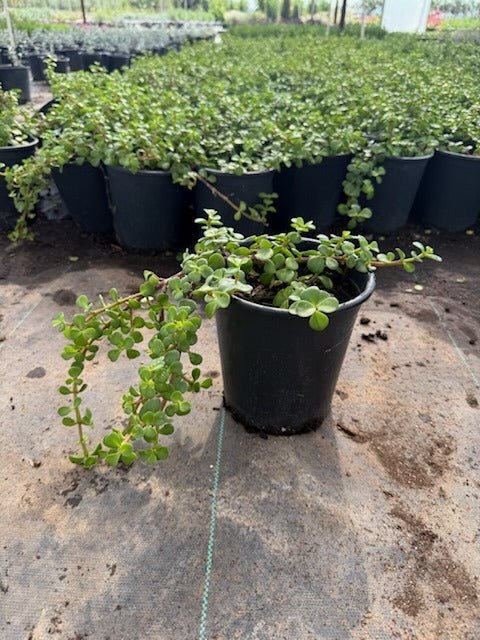
portulacaria afra best soil Buy Elephant's Food Phoenix, AZ | Portulacaria afraThe Best Drought Tolerant Privacy Shrub for Phoenix & Scottsdale Elephant's Food (Portulacaria afra) is Phoenix's #1 choice for a fast growing, ultra low water privacy shrub that delivers lush, year round structure with virtually no maintenance. This South African native reaches 815 feet tall with dense, succulent foliage on eye catching reddish brown stems creating a thick, living wall that thrives in the most punishing Arizona heat. Whether you're

The Best Drought-Tolerant Privacy Shrub for Phoenix & Scottsdale

Elephant's Food (Portulacaria afra) is Phoenix's #1 choice for a fast-growing, ultra-low-water privacy shrub that delivers lush, year-round structure with virtually no maintenance. This South African native reaches 8–15 feet tall with dense, succulent foliage on eye-catching reddish-brown stems — creating a thick, living wall that thrives in the most punishing Arizona heat. Whether you're building a privacy screen in Scottsdale, a poolside backdrop in Chandler, or a sculptural accent in Mesa or Gilbert — Elephant's Food delivers outstanding results on minimal water and care.

Elephant's Food Plant Details

Attribute Detail
Scientific Name Portulacaria afra
Common Names Elephant's Food, Elephant Bush, Spekboom, Porkbush
Mature Height 8–15 feet
Mature Width 8–15 feet
Growth Rate Fast — 1–2 feet per year in Phoenix conditions
Sun Full sun to partial shade. Thrives with reflected heat from walls and hardscape.
Water Very low once established. One of Arizona's most drought-tolerant shrubs.
USDA Zones 9–11 (Phoenix is Zone 9b–10a)
Soil Well-draining. Highly adaptable to Arizona caliche soils.
Foliage Evergreen — small, round succulent leaves; reddish-brown stems year-round
Bloom Color Pink (small star-shaped flowers in spring)
Native Region South Africa (proven performer in desert climates worldwide)

Elephant's Food Uses in Phoenix Landscapes

Privacy Hedge and Screening

Elephant's Food is one of the fastest ways to build a dense privacy screen in the Phoenix Valley. With its thick, succulent foliage and upright growth habit, it forms an impenetrable green wall that blocks sightlines from neighboring homes, streets, and pools. Plant 4–5 feet apart for a fast hedge, or 6–8 feet apart for a looser screen. Density guide: 20 ft fence — 5 plants / 40 ft fence — 10 plants. Pair with Texas Sage or Desert Spoon for a layered desert look that's both beautiful and functional.

Poolside Planting

Elephant's Food is one of the best plants for pool-adjacent landscaping in Scottsdale, Phoenix, and Tempe. Its succulent leaves don't drop in ways that clog filters, it handles reflected heat and water splashing without complaint, and its root system is non-invasive. The reddish stems and green foliage create a lush, tropical look that makes pool areas feel like resort-style retreats. It pairs beautifully with Ruellia or Bird of Paradise for a bold, colorful poolside planting.

Sculptural Accent and Modern Desert Design

Few plants offer the sculptural quality of a mature Elephant's Food. The twisted reddish branches and dense round leaves create striking architectural interest whether planted as a single specimen, used as a backdrop, or trained into a multi-trunk tree form. In modern desert landscapes across Chandler, Peoria, and Glendale, Elephant's Food is increasingly used as a high-impact focal point surrounded by decomposed granite or black gravel. For a bolder statement, pair it with a giant agave or sculptural cactus.

Wildlife-Friendly and Eco-Landscape

Elephant's Food is a proven wildlife magnet in Phoenix yards. Hummingbirds, native bees, and butterflies flock to the small pink spring flowers, and birds use the dense canopy for nesting and shelter. It's also one of the most carbon-sequestering plants on the planet — Spekboom forests in South Africa are celebrated for their ability to capture CO₂ at rates rivaling forests. If you're building a pollinator garden in Gilbert or Mesa, Elephant's Food belongs on your list.

Best Time to Plant Elephant's Food in Phoenix

Fall (October–November) is the ideal planting window. Warm soil temperatures encourage rapid root development, while cooler air temperatures reduce transplant stress. A fall-planted Elephant's Food gets 6–8 months of root establishment before its first Phoenix summer, setting it up to thrive for decades. Spring (February–April) is the second-best window. Avoid summer planting if possible — if you must plant in summer, provide afternoon shade for the first few weeks and water more frequently until the plant is established.

How to Plant Elephant's Food

  1. Dig wide, not deep — excavate a hole 2–3 times the width of the root ball and the same depth. Wide holes encourage lateral root spread.
  2. Check for caliche — break through any hardpan caliche layer to ensure water can drain freely. Poor drainage is the #1 killer of Elephant's Food in Arizona.
  3. Backfill with native soil — Portulacaria afra thrives in lean soil. A light 20% organic amendment is fine, but avoid heavy compost or peat.
  4. Spacing — 4–5 feet apart for a dense privacy hedge; 6–8 feet apart for a looser screen; 8–10 feet apart for individual specimens.
  5. Water basin — build a 3–4 inch raised ring of soil around the outer edge of the root zone to direct irrigation water to the roots during establishment.
  6. Mulch — apply 2–3 inches of bark mulch or gravel around the base to retain moisture, regulate soil temperature, and suppress weeds. Keep mulch 2–3 inches away from the trunk.

Watering Elephant's Food in Phoenix

First Year Watering Schedule

Consistent watering during the first year is critical to successful establishment, even for a drought-tolerant plant like Elephant's Food:

  • Weeks 1–2: Water every 1–2 days, deep and slow (20–30 minutes per session)
  • Month 1–2: Reduce to every 3–4 days as roots begin to spread
  • Month 3–6: Every 7–10 days (increase to every 5–7 days during peak summer heat above 110°F)
  • After Year 1: Every 10–14 days in summer; every 3–4 weeks in winter. Established plants handle long dry stretches with ease.

Drip Irrigation

Place drip emitters 18–24 inches from the trunk and use 1–2 GPH emitters per plant. Run for 30–45 minutes per session to ensure deep penetration. Once established, Elephant's Food requires very little supplemental irrigation in Phoenix and can often survive on rainfall alone in non-peak months — one of the most water-efficient large shrubs available in the Valley.

How fast does Elephant's Food grow in Phoenix?
In Phoenix's warm climate and full sun, Elephant's Food typically grows 1–2 feet per year. With regular water during the first two years, some plants can grow even faster, reaching 6–8 feet in just 3–4 years.

Is Elephant's Food truly drought tolerant once established?
Yes — once established (typically after 12–18 months), Portulacaria afra is one of the most drought-tolerant large shrubs available for Phoenix landscapes. Its succulent leaves store water, allowing it to withstand extended dry periods. It may drop some leaves during extreme drought but will rebound quickly once watered.

What's the difference between Elephant's Food and Elephant Bush?
They're the same plant. Portulacaria afra goes by many common names — Elephant's Food, Elephant Bush, Spekboom, and Porkbush are all the same species. At Three Timbers, we also carry a Variegated Elephant's Food with cream and green leaves, which is a slightly slower-growing variety with the same tough characteristics.

Can Elephant's Food handle Phoenix's reflected heat?
Absolutely. Portulacaria afra is native to the harsh, rocky hillsides of South Africa and was built for intense sun and radiant heat. It thrives planted against stucco walls, along south-facing fences, and in areas that would stress most other plants. It's one of the few large shrubs that can handle Phoenix's worst west-facing exposures.

Does Elephant's Food work near pools?
Yes — it's one of the best pool-adjacent plants in the Phoenix area. Its succulent leaves don't create significant litter, its roots are non-invasive, and it handles water splash and humidity without issues. It's a popular choice for creating resort-style poolscapes in Scottsdale and Paradise Valley.

You May Also Like

Variegated Elephant's Food — The same tough, water-wise species in a striking cream-and-green variegated form, perfect for a brighter, more decorative look.

Dwarf Elephant's Food — A compact, slower-growing variety that tops out around 4–5 feet, ideal for borders, containers, and smaller spaces.

Texas Sage — A native desert shrub with silvery foliage and purple blooms that pairs beautifully with Elephant's Food in privacy hedges and mixed borders.

Desert Spoon (Dasylirion) — A bold, architectural accent plant that complements the round, soft foliage of Elephant's Food with dramatic spiky structure.

Ruellia (Mexican Petunia) — A low-growing, prolific bloomer that pairs well at the feet of Elephant's Food hedges for a colorful, layered effect.

How Many Elephant's Food Do I Need?

For a fast privacy screen, space plants 4 to 5 feet on center. For a looser informal screen or where you want each plant to show its sculptural form, use 6 to 8 feet.

Screen run length Dense hedge (4 ft) Loose screen (6 ft)
20 ft 5 plants 4 plants
40 ft 10 plants 7 plants
60 ft 15 plants 10 plants

As a single specimen or multi-trunk feature, give it 8 to 10 feet of clearance so the twisted reddish branches can spread.

Elephant's Food Season-by-Season in Phoenix

  • Spring (Feb–Apr): Strong growth flush and small pink star flowers that draw bees and hummingbirds. Best second planting window after fall.
  • Summer (May–Sep): Peak growth in extreme and reflected heat, even on west-facing walls. Very low water once established. Monsoon humidity poses no problem for these waxy succulent leaves.
  • Fall (Oct–Nov): Prime planting season. Growth continues in the warm soil, giving roots months to establish before winter.
  • Winter (Dec–Jan): Evergreen and steady, but frost-sensitive. Tips and leaves can burn below about 28 to 30°F. In low desert cold snaps, cover young plants or expect cosmetic tip damage that flushes out again in spring.

At a Glance

✔ Evergreen   ✔ Drought-Tolerant   ✔ Heat-Loving (Reflected-Heat Tolerant)   ✔ Pool-Friendly (Low-Litter)   ✔ Pollinator-Friendly   ✔ Hummingbird-Friendly   ✔ Low-Maintenance   ✔ Edible

Plant It With

  • Variegated Elephant's Food: the same tough species in cream and green for a brighter accent in the same bed.
  • Dwarf Elephant's Food: a low, spreading form that layers neatly at the feet of the tall hedge.
  • Texas Sage: silver foliage and purple blooms for color contrast along a privacy screen.
  • Desert Spoon: spiky architectural form that plays off the soft round succulent leaves.

Is Elephant's Food Right for Your Yard?

It thrives in full sun and brutal reflected heat, drains-happy caliche, and needs almost no water once established, making it one of the best fast privacy shrubs in the low desert. The one caveat is frost: it is tender below about 28 to 30°F, so in cold pockets plan to cover young plants on hard frost nights or accept some tip burn that regrows in spring. Not the best fit for a spot that stays wet or poorly drained, since soggy roots will rot a succulent like this.

Shipping Notes
  • Free Standard Shipping on $100+ Orders to the USA.
  • Except Preorder products are shipped in 48 hours.
  • Delivery to the USA:
  1. Standard Shipping : 3-10 business days
  • If time is of the essence, please consider selecting expedited delivery for faster service.
Exchange/Return Notes
  • We offer a 30-day return/exchange service after receiving.
  • Final sale items are not eligible for returns or exchanges.
  • To process your return/exchange, please contact us at [email protected]
  • Please click here for more details>>> Return & Exchange Policy
SKU: 49293171555

Discover Niche Categories That Outsell portulacaria afra best soil

Top-Converting Item to Boost Your Average Order

4.6 ★★★★★
Based on 30 reviews
Sort
Highest Rating
Newest First
Oldest First
Product Reviews
P
Verified Purchase
PS
Omaha, US
★★★★★ 3
Good place to start
Format: Paperback
I am an independent college adviser based in California and I recommend this book to my clients but only at the very beginning of the process (mostly to the parents of rising high school freshmen and sophomores). This book is a good place to start especially for many of the foreign educated or immigrant families, who are new to the US College Admission process. The parents do tell us that the book loses its effectiveness once they gain knowledge of the process and/or they begin working one-on-one with an independent and/or become more conscious about meeting the high school counselors early in the process. I personally like the fact that once this book is overviewed by the families, we can spend more time addressing specific concerns and giving more customized advice. As a result we only need quarterly meetings and these meetings are extremely targeted. The problem with this book though is it reads like a huge information session by colleges. Those of you who have attended some of the information sessions will know what I mean. The insights provided by the deans and admission officers of various colleges sound somewhat like a "sales pitch" at times and at other times are misleading. I also recommend my students to keep their knowledge up to date by referring to various free resources such as Nancy Griesemer's educational articles in Washington Examiner Online, or the Choice Blog. I spend considerable time volunteering my services at a high school in a mixed/low income neighborhoods; I wish the price had been more reasonable considering that this is a basic book. Lastly as members of NACAC (National Association of College Admission Counseling), all of us in the admissions field (College Admission Officers, High School Counselors, and Independent Counselors) subscribe to certain codes of ethics and one of the Statements of Good Practice says this about Fairness and Equity: We believe our members have a responsibility to treat one another and students in a fundamentally fair and equitable manner. Unfortunately, Ms. Mamlet and Ms. VanDeVelde do a great disservice by being disrespectful to a large community of Independent College Advisers, many of whom are needed when the high school counselors are juggling with case loads of 200-300 students each and are unable to keep up with the changing scene of college admissions (either due to the lack of funding or time). Gone are the days when people went to some "quack-independents" who promised admissions to Ivy Leagues--sure there are some of those but if families are careful in their research, they will soon find out that these Independents do not belong to any authentic professional organizations such as the NACAC, HECA or IECA. Most students who come to the authentic professionals are motivated to find their right fit college, explore their own strengths and weaknesses and find the best match for their talents, interests and financial situation. Most independents offer services that are reasonably priced. If Ms. Mamlet and VanDeVelde show more commitment to researching folks on the other side of the spectrum, I am sure that their book will be more enlightening.
WAS THIS REVIEW HELPFUL?YesReportShare
Reviewed in the United States on August 18, 2013
A
Verified Purchase
AGB
Carnegie, US
★★★★★ 5
Best College Info Book Ever!
Format: Paperback
I have read dozens of college-related books in the past 4 years, and this one ranks the highest by far. Written by industry experts and the authors got a lot of top talent to contribute. Full of real-life advice and useful information that is actually true (I fact-checked this against some other info). I read parts of it out loud to my junior on the plane en route to a college tour, and she actually listened! Humor is always appreciated, and these authors use it without going overboard. Great information, well-presented. A must-read!
WAS THIS REVIEW HELPFUL?YesReportShare
Reviewed in the United States on February 22, 2013
B
Verified Purchase
B. Jones
Omaha, US
★★★★★ 5
A Must-Read for College (and Even High School) Students
Format: Paperback
First of all, this book really cuts to the point. If you are skilled with skim-reading, you can get this book in about 2 1/2 to 3 hours. Second, while these strategies are currently untested by me, they seem really practical. Rather than saying "study" or "write paper" or "take test", Dr. Newport lays down specific, useable guidelines for all areas that are intended to cut down on time spent on schoolwork. This helps you with more time to have fun, do extracurricular activities, or work 60 hours a week (like I will soon be doing). Third, this is THE anti-procrastination book, although I don't get the concept of starting term papers a month before they're due as the examples did. The whole concept behind this book is making sure you've got as little work going as possible that takes as little time as possible. Doing things upfront will ease your load later when the assignments and papers start rolling in and out. There are only a couple of issues I have with the book. 1) Dr. Newport almost makes the use of personal laptops compulsory in college. I get why it would be such an asset, but for some of us it is more of a liability than an asset. I really believe one can get through college without a laptop at a much smaller personal expense than the costs of buying a laptop/accessories, printer, ink, etc. If you already bought one, that's one thing, but if you haven't, why do you need one? Just use pen/paper and the computer labs' computers and printers. With the printers, odds are you're paying the same amount for 1000 pages that you would for toner (paper is free with the way they price it), and you don't have to drop the cost upfront, but pay as you need the printer. Financially, you're better off skipping the personal printer. 2) He didn't discuss what format to purchase textbooks, but considering he was so insistent on portability, I would probably haphazard a guess that a hard copy is the only way to go. Sure it may be expensive, but what if your Kindle or iPad gets stolen? Overall, highly, highly recommended. Get this for your child as an early (or very early) graduation present. Teaching them these things will save them a lot of headaches later on. One last note: This book is not for the lazy. If you aren't willing to do the work, don't expect this book to help. However, if you're someone like me who's sick of lazy and wants to convert, this book IS for you!
WAS THIS REVIEW HELPFUL?YesReportShare
Reviewed in the United States on December 18, 2012
R
Verified Purchase
Ricky Luis
Omaha, US
★★★★★ 5
One more crappy college study guide
Format: Paperback
When I was taking 4 classes at my local community college, I tried to follow the part of the book that said just to learn math by examples. I ended having to drop the class because at first I was actually ahead of the professor. Then I tried this stupid book's technique of learning by examples and I ended up falling behind. The same can be said of "What smart students know" it's actually a good technique (smart students), but you end up spending hours thinking up questions. Questions can be a part of the process, but it can't be the whole process. I just bought an online course than is way better than both of these combined. It's so good. The point I'm at in the course you can memorize up to 50 items in reverse and forward. You can also tell which place in the list. An example could be The order of my hallway: Dog = front door Cat = wall Duck = light switch Printer = holder Hitler = chair MAO = rug Goku = ceiling light Kurrin = mirror Gohan = heater Frieza = painting You would then connect / visualize each word / picture with a part of your house. The rule is to visualize each for only 6 seconds while recalling can only take 6 seconds. If you miss one you have to do the six second process again until you make no mistakes. P.S. I'm not telling anyone the name of the course or where to buy it. I want to be ahead of all other students. Edit: I'm back in college taking two college level courses. While I don't agree with everything in this book (I have to re-read it) I agree with 80-85% of the methods used in this book that I remember. Such as not doing the reading he was right. I haven't done the reading in my psychology 101 class and have only focused on taking / memorizing / learning the notes and while I haven't gotten a grade yet, I actually feel I'm learning enough and today in class I note notes from a documentary we watched. The professor said to do the reading for chapter 2 of the textbook. I'm not even going to do it. I'm going to just take notes in class then go over the reading. I did this for my 1st set of notes and I didn't understand something in the lecture notes. I ended up re-reading that / part / example [it was on the scientific method]. I remember from taking my developmental math class that the professor was actually doing examples (even though I couldn't figure out from what part of the book they were from and / or I couldn't write every example like he said) If I had just asked questions and either watched videos on Youtube I would've probably remembered the material from that class. I'll do another edit once I'm done with classes. I'm also going to write / provide a list of books that I think are good for learning and have good advice for college. Edit: I ended up trying to do the advice from this book and if I didn't look up the answers for the test for my psychology class I wouldn't be in college today. I'm not saying that all of this book is bad but I went from thinking that 85% of it is good to now thinking that 50% of this book is good. The other half is crap. Such as the technique for Q/E/C he doesn't give any examples or enough examples. The other advice like making your own problem sets I wouldn't have thought of. Even though this is an all right technique your wasting time because you can just practice doing other peoples problems (like those online or from a professor) or do Bullet point concept from another book I read (I'm going to provide a list once I'm done with this review). The one technique that is very good is the lecture technique he mentions in the book. For some reason, this technique helps with putting material into memory. His section on writing papers is also very good. His explanation on how to prepare for and take exams is also good. Also, he should have made the book more visual and put actual writing from actual students other than that it's an all right book. Here's the list of books I've read (so far) that will most likely get you A's College Rules https://www.amazon.com/College-Rules-4th-Survive-Succeed/dp/1607748525/ref=sr_1_1?s=books&ie=UTF8&qid=1530133408&sr=1-1&keywords=college+rules Guaranteed 4.0 https://www.amazon.com/Guaranteed-Follow-3-Step-Plan-Dont/dp/0974264806/ref=sr_1_1?s=books&ie=UTF8&qid=1530134451&sr=1-1&keywords=guranteed+4.0 How to study in college https://www.amazon.com/How-Study-College-Walter-Pauk/dp/1133960782/ref=sr_1_4?s=books&ie=UTF8&qid=1530134633&sr=1-4&keywords=how+to+study+in+college The only book I've read from cover to cover is GT 4.0 it's probably the best in my opinion because the system in this book will get you A's. The only reason last semester I didn't get A's was because I didn't follow the system to the t. If you follow the GT 4.0 system to a t and don't get all A's she'll give you $100. Hope this helps. Edit 2020: From what I remember reading this book, this applies to college level courses and even at the same time I tried using his question / evidence technique while taking a psy101 class and couldn't do it. Also he's right to a very large degree about living off of lecture notes. Living off of the lecture notes IMHO can only be done if it's a science science class or a college level math class. I'm currently taking a pre-req class and the professor explains everything. Along with the Guaranteed 4.0 technique this is a pretty decent book.
WAS THIS REVIEW HELPFUL?YesReportShare
Reviewed in the United States on January 24, 2012
S
Verified Purchase
S. Bandy
Massapequa, US
★★★★★ 4
Wish I had read this sooner
Format: Paperback
This book is not that revolutionary, but very helpful. It essentially tackles three main problem areas for college students: 1) time management skills, 2) studying and exam prep, and 3) essay writing. Some of these are common sense things that many people resist implementing. If you are struggling with college, or are a high school senior unsure of what to expect in college, this book is very helpful. The true value in this book, for me at least, was in providing the satisfaction that these strategies worked. I would often start out a semester by doing the things listed in the book. I would manage my time, study effectively for exams, thoughtfully plan out papers and assignments. Halfway through the semester, I always had straight As. But as finals crept up, I would panic. Since every other student spent hours in the library studying, I abandoned the effective strategies to follow suit. As a result, my final exam grades were inconsistent and my final papers were always rushed. This book gave me the satisfaction of knowing that I can trust these time saving strategies. You do not need to spend hours and hours on projects to get a good grade. It's okay to not spend hours in the library studying for a final. Trust that these strategies work, and enjoy your stress-free semester. But, the book does have faults. While this book provides very useful information, I feel it misses two aspects of the college experience that can have a large impact on your grade: presentations and group projects. (Also the dreaded group presentation). While you can implement some of these strategies in these situations, it would be nice to know how top students manage working in group project settings, especially those that require research. I can't tell you how many times I've been in a group project where half the group doesn't show up to meetings, members refuse to do their work, or people drop the class halfway through the project. I still haven't figured out an adequate way to deal with these situations besides just doing the work myself at the last minute. Bottom line, this book is well worth the money. Whether you are a college senior or a high school senior and everything in between, this book will help you as long as you faithfully implement the strategies. But do search out other resources for help with managing group projects.
WAS THIS REVIEW HELPFUL?YesReportShare
Reviewed in the United States on December 12, 2012

recommand products