Pay in installments of $5.48 with
 ,
,
 and
and

Shipping Estimate
USA
- USA
- CAN
- USA
- CAN
Ships within 48 hours · Estimated delivery Jul 20 - Jul 25
 Promo Codes Available:
For Your Every Summer RSVP, with Code: SUMMER15
Description
chlorophytum chevelu Chlorophytum comosum 'Variegatum' – Foliage FactoryChlorophytum comosum 'Variegatum' Chlorophytum comosum 'Variegatum' is a variegated spider plant cultivar with arching green leaves edged in white to cream. It grows from a central rosette and develops a graceful cascading outline as the leaves lengthen and mature flower stems begin to carry small plantlets. The pale margins create a ribboned edge along each strap shaped leaf, with a green centre running through the rosette. Mature plants can produce
Chlorophytum comosum 'Variegatum'
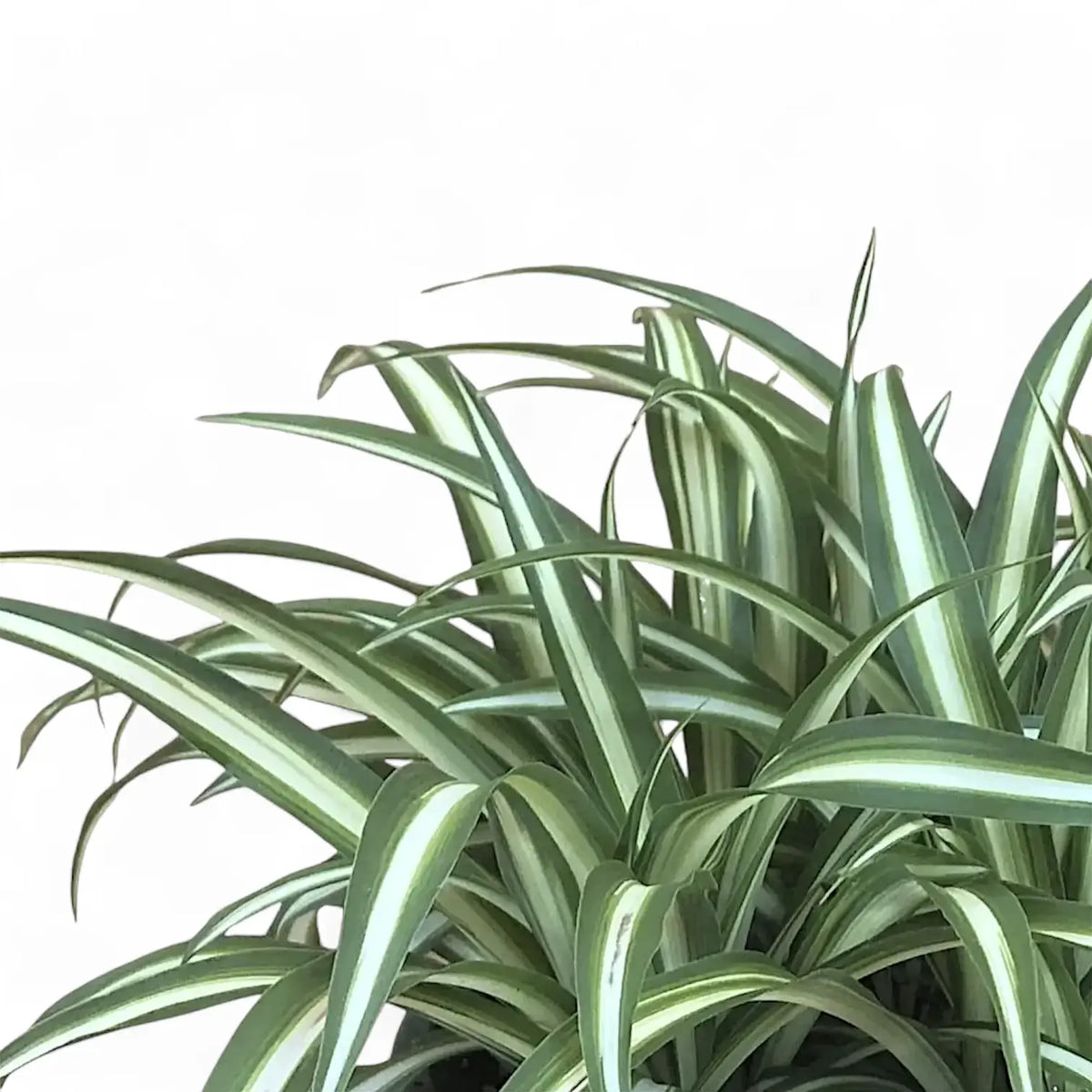
Chlorophytum comosum 'Variegatum' is a variegated spider plant cultivar with arching green leaves edged in white to cream. It grows from a central rosette and develops a graceful cascading outline as the leaves lengthen and mature flower stems begin to carry small plantlets.
The pale margins create a ribboned edge along each strap-shaped leaf, with a green centre running through the rosette. Mature plants can produce thin arching stems with small white flowers, followed by young plantlets that root easily once they form small root initials.
Classic striped spider plant traits
- Variegated spider plant cultivar with green centres and pale leaf margins
- Arching rosette growth with narrow strap-shaped leaves
- Produces small white flowers and hanging plantlets on mature stems
- Fleshy roots store moisture and fill containers strongly over time
- ASPCA-listed as non-toxic to cats and dogs
Botanical origin and variegated growth
Chlorophytum comosum belongs to the Asparagaceae family and is native across parts of tropical Africa into southern Africa. The species grows as a perennial with tufted leaves, fleshy roots, and flowering stems that can carry both flowers and plantlets.
'Variegatum' is a cultivated variegated form of Chlorophytum comosum. Its green-centred leaves with pale margins create a clear striped effect, especially once the leaves arch over the pot. The plant’s thick roots help it cope with short dry phases and can fill a container quickly during active growth.
Care for arching variegated growth
- Light: Set in bright indirect light or gentle morning/evening sun. Strong midday sun can scorch the pale margins and leave dry marks.
- Watering: Give a thorough soak once the upper substrate has dried, then let the pot drain fully. The thick roots cope well when the upper substrate dries before the next soak.
- Substrate: Choose a well-drained houseplant mix with enough openness for thick roots. Perlite, fine bark, or pumice helps prevent compaction.
- Temperature: Maintain temperatures above 15°C for steady growth. Cool wet conditions can damage the fleshy roots.
- Humidity: Regular room humidity is suitable. Dry heated air can contribute to tip browning, especially on older leaves.
- Feeding: Apply a mild fertiliser during spring and summer. A light schedule keeps growth steady and limits salt stress in the root zone.
- Repotting: Repot when roots press firmly against the pot or water runs through too quickly. Divide crowded clumps during repotting if desired.
- Pruning: Remove dry tips, spent flower stems, and old plantlets with clean scissors. Keep the central crown clear and dry after watering.
- Propagation: Root plantlets in substrate once small roots are visible, or divide mature clumps with several growth points.
- Summer outdoors: Warm sheltered shade suits seasonal placement. Acclimate gradually and bring indoors before cool nights return.
Tips, roots and runner signals
- Brown tips: Check water quality, watering pattern, dry air, and fertiliser salts. Low-mineral or rainwater can help where tap water causes repeated tip burn.
- Yellowing and soft roots: Usually points to a wet, compacted root zone. Check drainage and repot into a more open mix if needed.
- Scorched pale margins: Move the plant out of direct sun and trim only fully dry tissue.
- Few plantlets: Younger plants often need more time before sending out runners. Very rich feeding can also favour leaves over plantlet production.
Offsets and repotting signs
Chlorophytum comosum can fill a pot with thick white storage roots. A crowded root system can reduce water retention in the substrate, so a plant that dries unusually fast may be ready for repotting or division.
Pet-safe status and trailing leaves
Chlorophytum comosum appears on ASPCA’s non-toxic list for cats and dogs. Fibrous leaves can still trigger vomiting after chewing, so keep long leaves and plantlets away from animals that nibble houseplants.
Botanical name and cultivar note
The accepted species name is Chlorophytum comosum (Thunb.) Jacques, in the family Asparagaceae. The genus name Chlorophytum comes from Greek roots meaning green or yellow-green plant. The species epithet comosum means furnished with a tuft, referring to the tufted rosette of leaves. 'Variegatum' is the pale-edged variegated spider plant cultivar.
Chlorophytum comosum 'Variegatum' forms arching striped leaves and plantlet-producing runners from a tufted rosette.
Shipping Notes
- Free Standard Shipping on $100+ Orders to the USA.
- Except Preorder products are shipped in 48 hours.
- Delivery to the USA:
- Standard Shipping : 3-10 business days
- If time is of the essence, please consider selecting expedited delivery for faster service.
Exchange/Return Notes
- We offer a 30-day return/exchange service after receiving.
- Final sale items are not eligible for returns or exchanges.
- To process your return/exchange, please contact us at [email protected]
- Please click here for more details>>> Return & Exchange Policy